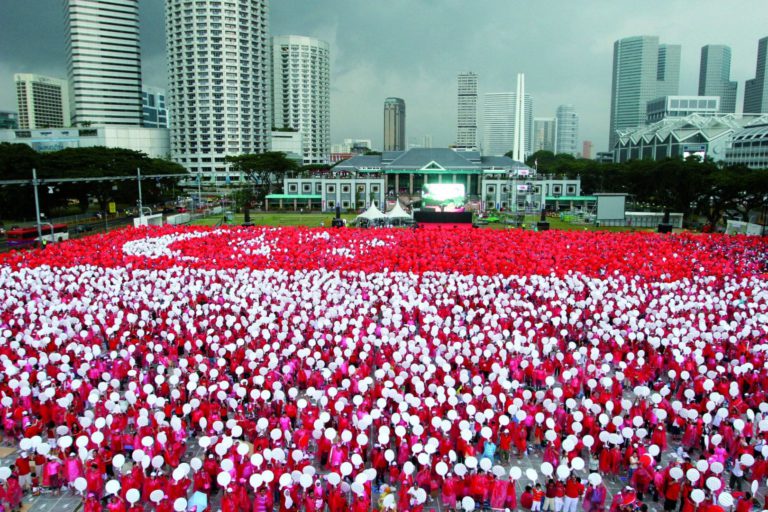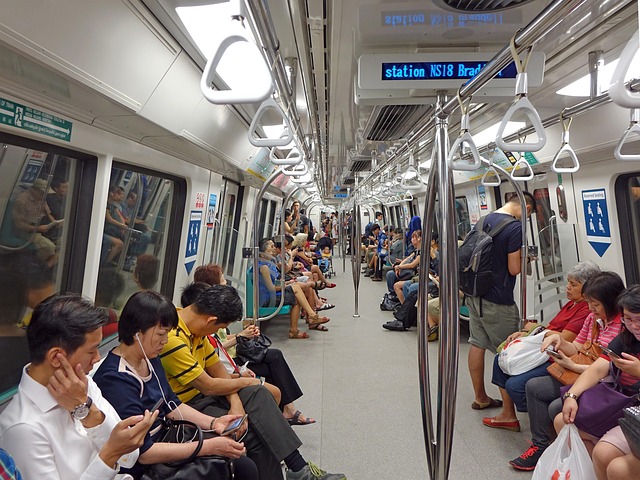
Singapore’s success as a multicultural nation has often been attributed to careful social engineering, pragmatic governance, and a clear-eyed acknowledgment of racial realities. Central to this approach is the CMIO framework, which classifies citizens into four broad racial categories: Chinese, Malay, Indian and Others. This framework has shaped public housing, political representation, education, and social policy for decades.
However, as Singapore confronts an ageing population, persistently low birth rates, and an ongoing reliance on immigration to sustain economic competitiveness, questions are increasingly being raised about whether the CMIO framework remains fit for purpose. Beyond questions of identity, the framework now intersects directly with immigration policy, citizenship pathways, and Singapore’s long-term demographic composition.
The Origins and Enduring Role of the CMIO Framework
The CMIO framework was never intended to be a cultural statement of who belongs in Singapore. Rather, it was designed as a policy instrument to manage racial diversity in a young and fragile nation. By recognising distinct racial groups, the state could address disparities, ensure minority protection, and prevent the formation of ethnic enclaves that could undermine social cohesion.
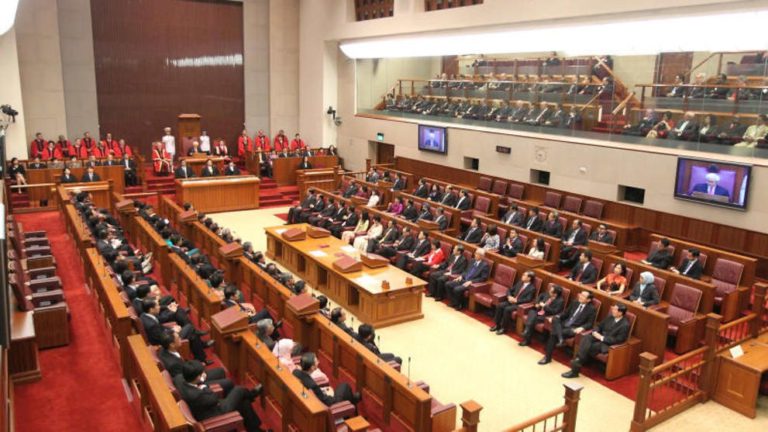
Over time, CMIO became embedded in core governance mechanisms, including the Ethnic Integration Policy in public housing and the Group Representation Constituency scheme in politics. These policies rely on stable racial proportions and clear categorisation to function effectively. From this perspective, CMIO has contributed meaningfully to Singapore’s relative racial harmony.
Yet, the framework was conceived in a vastly different demographic era; one where immigration was limited, identities were more homogenous, and social mobility largely occurred within fixed racial boundaries.
Demographic Pressures and Immigration Realities
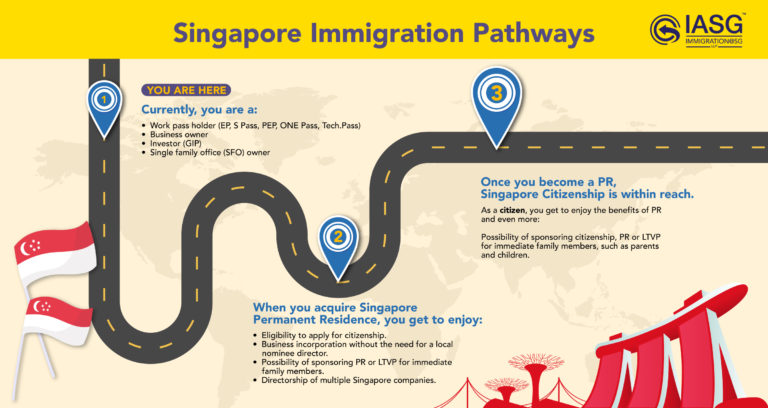
Singapore’s demographic challenge today is structural rather than cyclical. The total fertility rate remains well below replacement level, and the working-age population is shrinking. Immigration, through Permanent Residency and citizenship, has therefore become a permanent feature of national survival rather than a temporary policy initiative.
At the same time, the global talent pool Singapore draws from has diversified significantly. Many prospective PRs and citizens come from regions that do not fit neatly into the traditional CMIO framework. Others are of mixed heritage or possess cultural identities shaped by multiple countries.
In this context, the CMIO framework does more than classify identity. It indirectly shapes who can realistically be absorbed into Singapore’s population mix.
How a Changed CMIO Framework Could Benefit PR and Citizenship Policy
One potential benefit of adjusting the CMIO framework lies in greater demographic flexibility. Today, maintaining certain racial proportions, particularly the Chinese majority, places implicit constraints on how many new citizens from non-Chinese backgrounds can be absorbed without disrupting policy-sensitive ratios in housing, education, and representation.
If Singapore were to recalibrate the CMIO framework by allowing more fluid identity recognition especially for mixed-race individuals, or reducing current Chinese ethnic percentages while increasing Others, it could ease these constraints. A lower emphasis on preserving a dominant racial proportion may allow Singapore to admit more new citizens from a wider range of nationalities and ethnicities, including those from emerging economies and non-traditional source countries.
Such flexibility could strengthen Singapore’s position as a truly global city, enhance its talent pool, and reduce overdependence on a narrow set of source countries. It may also improve integration outcomes for new citizens who feel that their identities are acknowledged rather than compressed into ill-fitting labels.
In the long run, a more adaptable framework could allow Singapore to align its citizenship strategy more closely with economic needs, skills profiles, and cultural adaptability rather than inherited demographic ratios alone.
Identity, Belonging, and Integration Outcomes
A recalibrated CMIO framework could also positively influence social integration. For some new citizens, being assigned a rigid racial category can feel transactional rather than inclusive. Allowing greater nuance in identity recognition such as mixed or multi-ethnic classification may strengthen emotional attachment to Singapore and foster a stronger sense of belonging.
Younger Singaporeans, many of whom already navigate multicultural spaces fluidly, may also find a more flexible framework better aligned with their lived experiences. Over time, this could support the development of a national identity that is anchored less in ancestry and more in shared civic values.
The Downsides and Risks of Changing the CMIO Framework
Despite these potential benefits, altering the CMIO framework carries significant risks that cannot be ignored.
CMIO remains a critical tool for minority protection. Policies designed to prevent marginalisation rely on clear racial data. Diluting or complicating these categories could make it harder to identify structural inequalities or ensure fair representation, particularly for historically vulnerable communities.
Second, sudden demographic shifts such as a visible reduction in the Chinese proportion of the population may generate social anxiety. In a society where race remains politically and emotionally salient, perceptions of demographic displacement could fuel insecurity, resistance to immigration, or communal tension if not carefully managed.
Third, the functionality of existing policies would be directly affected. Housing quotas, political representation mechanisms, and community self-help organisations are all built around CMIO assumptions. Adjusting the framework would require comprehensive policy redesign, administrative overhaul, and a long transition period, during which inconsistencies and public confusion could arise.
Finally, there is the risk that changing CMIO without strengthening integration mechanisms could worsen outcomes rather than improve them. A more open citizenship policy must be matched by robust efforts to inculcate shared norms, social trust, and civic responsibility.
Possibility of a Cautious Reform
The debate, therefore, is not about whether CMIO should be abolished or preserved unchanged. A more realistic approach lies in measured adjustment. This could involve reducing the rigidity of racial proportions or allowing greater individual choice in identity declaration while preserving CMIO’s role in monitoring equity and safeguarding minority interests.
At the same time, Singapore would need to place greater emphasis on integration as a lived process rather than a statistical outcome. Citizenship should continue to signal commitment to shared values, social norms, and collective responsibility, regardless of racial background.
Current Management of the Outliers
Beyond managing the CMIO balance, the Singapore Government is also deliberately raising the overall quality of foreign talent and capital inflows by targeting globally mobile UHNW individuals and top-tier professionals, who often fall outside the traditional CMIO framework. Schemes such as ONE Pass, Tech.Pass and EntrePass, alongside family office (SFO) structures, investment-linked residency pathways and flexible business ownership models, signal a clear intent to attract individuals who bring disproportionate economic value, networks and intellectual capital. Importantly, many of these individuals are not seeking long-term personal domicile or PR in Singapore; instead, they anchor their businesses, assets and investment vehicles here.
IASG supports this group end-to-end by advising on the most suitable pass options, structuring family offices and holding companies, coordinating tax and regulatory compliance, and designing asset and business setups that allow them to operate from Singapore efficiently while remaining globally mobile; enabling Singapore to capture economic value without materially impacting CMIO demographic objectives.
The Future Demographic of the Local Population in Singapore
Singapore’s CMIO framework has been a cornerstone of its multicultural governance, providing stability in a complex social landscape. Yet, demographic pressures and global realities suggest that some recalibration may be necessary if Singapore is to remain open, competitive, and cohesive.
A carefully adjusted CMIO framework could give Singapore greater flexibility in its PR and citizenship policies, enabling a broader range of nationalities and ethnicities to become part of the social fabric. However, such changes must be approached with caution, clarity, and a strong commitment to social cohesion.
The challenge is not merely to allow more new citizens, but to ensure that demographic evolution strengthens rather than strains the bonds that hold Singapore together.