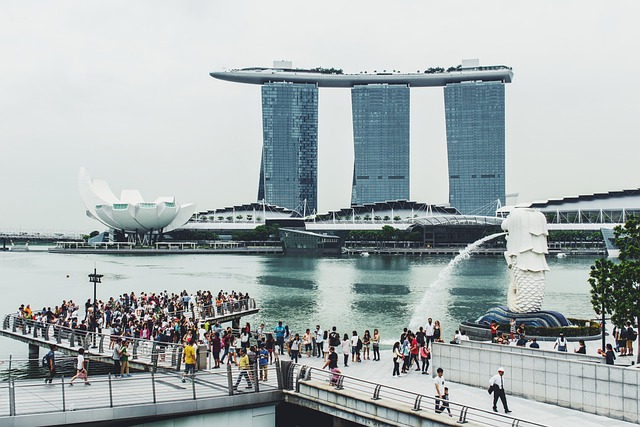
Singapore is often held up as a global model of racial harmony. In a region historically marked by ethnic tensions, the city-state has built a reputation for stability, diversity, and coexistence. Walking through its neighborhoods, one sees mosques, temples, and churches standing within close proximity; hears multiple languages spoken freely; and observes people of different backgrounds sharing common public spaces. On the surface, this appears to be a remarkable success story but is Singapore’s social integration authentic or merely performative?
Engineering Harmony Through Policy
To understand this, one must first recognise the historical context. Singapore’s approach to race relations was shaped profoundly by the racial riots of the 1960s. In response, the government adopted a highly interventionist model, embedding racial balance into public policy. Measures such as the Ethnic Integration Policy (EIP) in public housing ensure that no single ethnic group dominates a neighborhood, thereby engineering diversity at the residential level. Similarly, national narratives, education, and public campaigns consistently reinforce the importance of multiracialism.
These policies have undoubtedly achieved their intended outcomes in certain respects. Singaporeans grow up in environments where diversity is normalised, and overt racial conflict is rare. Compared to many countries, there is a shared baseline understanding that racial harmony is non-negotiable. However, when integration is heavily managed by the state, it can sometimes resemble compliance rather than genuine connection.
Surface-Level Integration
One critique is that social integration in Singapore often operates at a surface level. While people of different races live side by side, their social circles frequently remain within their own communities. Interactions across racial lines tend to occur in structured environments such as schools, workplaces, or national service, but may not always translate into deeper personal relationships. This suggests that proximity does not automatically lead to meaningful integration.
Open Discrimination of Indian Nationals
This dynamic becomes more visible when examining social attitudes that surface in everyday discourse. For instance, there has been periodic public backlash against certain foreign groups, particularly professionals associated with the Comprehensive Economic Cooperation Agreement (CECA) between India and Singapore. Concerns about job competition have, at times, evolved into broader social resentment, with online discussions and anecdotal workplace experiences reflecting stereotypes or generalisations about Indian nationals. While these sentiments are often framed in economic terms, they can spill over into social attitudes that affect interpersonal interactions, reinforcing boundaries rather than fostering integration.
Distancing from Mainland Chinese
Similarly, perceptions of immigrants from China have also revealed underlying social distance. Complaints about cultural differences, communication styles, or social behavior are not uncommon in public and online discourse. While some criticisms may stem from genuine differences in norms, they can sometimes take on a dismissive or exclusionary tone, making it harder for these groups to feel socially accepted despite being physically integrated into workplaces and communities.
Brewing Dissonance Amongst Local Population
Beyond attitudes toward foreigners, there are also subtler forms of intra-societal racial distance, particularly in how majority and minority groups interact. Research studies, surveys, and local discussions have pointed to instances of passive or casual racism, where remarks about race are normalised in informal settings. Examples include offhand comments about skin color, cultural habits, or religious practices, as well as preferences in hiring or social inclusion that may quietly favor certain groups over others. These are rarely expressed as overt hostility, but rather as ingrained biases that persist beneath the surface of polite society.
In everyday life, this can manifest in small but telling ways – who gets invited into social circles, who feels comfortable speaking up in group settings, or who is subtly perceived as an “outsider” despite being Singaporean. For minorities, these experiences can create a sense of conditional belonging – accepted in principle, but not always fully embraced in practice.
The digital space has amplified visibility into these dynamics. Social media discussions, viral incidents, and anonymous forums have occasionally exposed sentiments that are less visible in face-to-face interactions. These moments do not necessarily represent the majority, but they do reveal that beneath Singapore’s orderly and harmonious exterior, there are unresolved perceptions and biases that structured integration alone cannot address.
Taken together, these examples illustrate a key limitation of surface-level integration: coexistence does not automatically translate into cohesion. Policies can ensure that people live, study, and work together, but they cannot by themselves create trust, empathy, or genuine social bonds. Without deeper engagement, differences may be managed but not truly understood.
Limits of Regulated Harmony
Another dimension to consider is the role of social norms and regulation. Singapore maintains strict laws against speech or actions that could incite racial tension. While this has been effective in preventing conflict, it may also discourage open conversations about race. Sensitive issues are often avoided rather than addressed, creating a form of polite silence. In such an environment, harmony can appear intact, but underlying tensions or biases may remain unexamined.
The Performance of Diversity
The concept of performative harmony emerges most clearly in public discourse. National events, campaigns, and media representations frequently showcase diversity in a curated and symbolic manner. Cultural festivals are celebrated, and racial representation is carefully balanced in official narratives. While these efforts reinforce unity, they can sometimes feel scripted, emphasising optics over authenticity. Critics argue that this creates a version of harmony that is more about maintaining an image both domestically and internationally, than fostering genuine understanding.
Consequences of Performative Social Integration in Singapore Today
If elements of Singapore’s racial harmony are indeed performative, their effects are not merely theoretical, they manifest in subtle but meaningful ways across society.
Social silos beneath physical integration
Although neighborhoods are ethnically mixed due to policy, friendships, marriages, and informal networks often remain intra-racial. This creates a paradox where people coexist peacefully but lack deep cross-cultural understanding. Over time, this can reinforce stereotypes rather than dismantle them, as interactions remain limited or transactional.
Unspoken tensions and microaggressions
Because open discussions about race are often avoided, biases may surface indirectly through casual remarks, workplace dynamics, or social exclusions. These experiences rarely escalated into public conflict, but they accumulate quietly, particularly among minority groups who may feel that their concerns are acknowledged symbolically but not substantively.
Underrepresentation and perceived structural inequality
In sectors such as corporate leadership, media visibility, or certain high-status professions, some groups may feel less represented. While meritocracy is a core national principle, the lack of open discourse about race can make it difficult to examine whether systemic barriers exist, leading to a sense of frustration that remains largely contained rather than collectively addressed.
Performative compliance in public behavior
Many Singaporeans are highly conscious of what is socially acceptable to say or do, especially regarding race. While this ensures civility, it can also lead to interactions that are polite but guarded. People may avoid meaningful conversations for fear of saying the wrong thing, limiting opportunities for genuine connection and growth.
Suppressed conversations find expression
In the digital age, these underlying tensions increasingly surface online. Social media platforms have become spaces where suppressed conversations find expression, sometimes in more polarised or emotionally charged forms. Incidents that might once have remained isolated can now trigger widespread debate, revealing fractures that are less visible in everyday offline life.
Identity negotiation among younger Singaporeans
Growing up in a system that emphasises harmony, many are now questioning what that harmony truly means. They are more willing to engage in conversations about privilege, discrimination, and cultural identity. While this can create discomfort, it also signals a shift away from passive acceptance toward active engagement – a necessary step for deeper integration.
Shared Responsibility: What Newcomers Can Do
If Singapore is to move toward deeper integration, newcomers such as foreigners, new citizens, and permanent residents must play an active role.
Assimilation begins with intentional effort. Understanding local norms, respecting cultural sensitivities, and participating in community life are essential steps. Building genuine relationships with locals, rather than remaining within familiar social or cultural enclaves, helps bridge divides.
Cultural humility is equally important. Singapore’s diversity is shaped by a unique historical and social context. Newcomers who approach this with openness and willing to listen and adapt, are more likely to integrate meaningfully. Even small actions, such as engaging with local traditions or learning elements of different cultures, can foster mutual respect.
Shared Responsibility: What Singaporeans Can Do
Integration cannot be one-sided. Singaporeans also have a responsibility to create space for genuine inclusion.
This begins with openness by moving beyond surface-level acceptance to actively include newcomers in social and professional circles. It also involves challenging assumptions and avoiding simplistic labels about foreigners.
More importantly, there must be a growing willingness to engage in honest conversations. While caution has preserved harmony in the past, the future may require more dialogue grounded in empathy and mutual respect.
Singaporeans can also help redefine integration itself, not as conformity, but as a shared process where both locals and newcomers contribute to an evolving national identity.
Moving From Managed Harmony to Meaningful Connection
Ultimately, the question of whether Singapore’s social integration is performative does not have a simple answer. It exists on a spectrum. The country has successfully built a framework that ensures coexistence and stability, but this framework can sometimes prioritise order over authenticity.
The challenge moving forward is not to dismantle what works, but to deepen it. True integration requires more than shared spaces. It demands trust, openness, and the courage to engage with uncomfortable truths.
If Singapore can evolve in this direction, it has the potential to move beyond performative harmony toward something far more powerful – a society where diversity is not only seen, but genuinely understood and lived.