China’s introduction of the K-visa for young science and technology professionals marks a clear shift in how the country positions itself in the global competition for talent. At a time when many countries are tightening immigration rules, Beijing is signalling that it wants to remain open to foreign innovators, researchers and technically skilled graduates. Inevitably, comparisons have been drawn with Singapore, a long-established hub for global tech talent in Asia. The key question is whether China’s new visa is a genuine competitor to Singapore’s ecosystem, or simply a complementary option that appeals to a different profile of professionals.
What the K-visa is designed to achieve
The K-visa is intended to lower entry barriers for foreign tech talent, particularly younger professionals and graduates who want to work, collaborate or conduct research in China. Unlike traditional employer-tied visas, it aims to provide greater flexibility, allowing individuals to move across companies, research institutes and innovation projects. From a policy perspective, this reflects China’s longer-term concerns around demographics, innovation capacity and strategic technologies such as artificial intelligence, semiconductors and biotechnology. The visa is therefore less about filling immediate labour shortages and more about strengthening the country’s innovation pipeline.
Singapore’s established talent attraction model
Singapore’s approach to attracting tech talent is far more mature and deeply embedded in its economic strategy. Over the years, it has built a layered system of work passes and talent programmes that cater to different segments of the technology workforce. Schemes such as the Tech.Pass target established founders, senior executives and recognised experts, while other work passes support employer-sponsored hiring and entrepreneurship. These visa routes sit within a broader ecosystem that includes venture capital networks, multinational headquarters, accelerators, and a legal and financial system that is familiar and trusted by international professionals.
Areas of overlap and key differences
On the surface, China’s K-visa and Singapore’s talent passes appear to overlap in their objectives. Both are designed to attract globally mobile tech professionals and reduce friction in cross-border movement. Both also recognise that modern talent values flexibility and autonomy rather than being tied to a single employer. In this sense, China is clearly entering the same competitive arena as Singapore.
The differences, however, are significant. Singapore’s advantage lies in predictability and accessibility. English is the working language, regulations are transparent, and intellectual property protections are well established. For many foreigners, relocating to Singapore involves relatively low cultural and operational friction. China, by contrast, offers unparalleled market scale and manufacturing depth, but also presents challenges related to language, regulatory complexity, data governance and internet controls. These factors shape day-to-day working realities in ways that a visa alone cannot offset.
China’s strengths and constraints
For China, the K-visa plays directly to its strengths. Technologists working on products that require large datasets, rapid iteration or proximity to advanced manufacturing may find China uniquely attractive. The timing of the K-visa is also strategic, as tightening immigration regimes in the United States and parts of Europe push some professionals to look for alternatives. However, cultural integration, regulatory uncertainty and sector-specific restrictions remain real constraints that may limit the visa’s appeal for some global talent.
Singapore’s advantages and vulnerabilities
Singapore continues to attract founders, senior leaders and globally oriented professionals who value stability, neutrality and long-term planning. Its main vulnerability is not competition from China, but its own structural limits. As a small country, it cannot match China’s scale, and periodic tightening of work pass criteria can create uncertainty. Even so, its consistency, rule of law and ease of doing business remain powerful draws for international talent.
Why Singapore’s Tech.Pass remains a strong proposition
Amid growing competition for global tech talent, Singapore’s Tech.Pass stands out as one of the most attractive and flexible options in Asia. Unlike traditional work passes that require employer sponsorship, the Tech.Pass is issued to the individual, giving accomplished tech leaders the freedom to start companies, join multiple firms, invest, mentor startups or take on advisory roles. This flexibility is especially appealing to founders, senior executives and domain experts who want to actively shape an ecosystem rather than fit into a single job role.
More importantly, the Tech.Pass is not just a visa; it is a gateway into Singapore’s broader innovation environment. Pass holders benefit from proximity to Southeast Asia’s fastest-growing digital markets, access to global capital, and a trusted legal and regulatory framework that supports long-term business planning and intellectual property protection. For many tech leaders, this combination of autonomy, stability and regional reach is difficult to replicate elsewhere.
How IASG can support Tech.Pass applicants
Navigating the Tech.Pass application process requires more than meeting headline eligibility criteria. Applicants must clearly demonstrate their professional track record, leadership impact and relevance to Singapore’s tech ecosystem. This is where experienced immigration consultancies such as Immigration@SG (IASG) play a critical role.
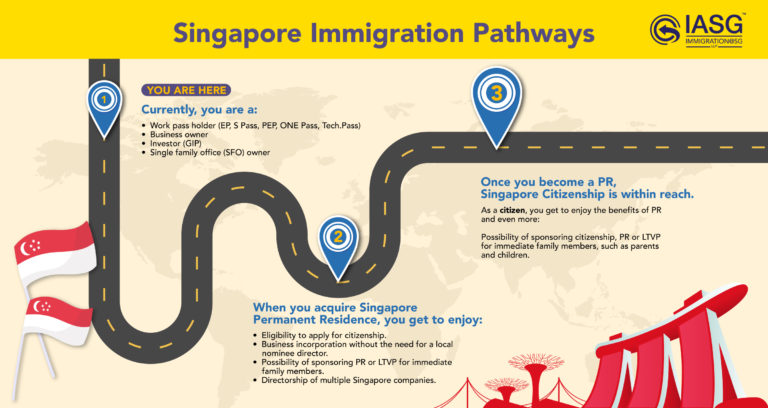
With over 10 years of industry experience, IASG brings deep familiarity with Singapore’s immigration policies and evolving assessment standards. For Tech.Pass candidates, IASG can help position professional achievements strategically, ensure documentation is aligned with current expectations, and advise on how to present business plans or ecosystem contributions in a way that resonates with decision-makers. Beyond the application itself, IASG also supports clients with longer-term planning, including family relocation considerations and pathways to permanent residency, helping tech professionals make Singapore a sustainable base rather than a short-term stop.
Competition or coexistence?
Whether the K-visa truly competes with Singapore depends on how it is implemented in practice. Clear pathways to long-term residence, family relocation and meaningful participation in China’s innovation economy will be critical to its success. In reality, the competition is unlikely to be zero-sum. China and Singapore are positioning themselves to attract different segments of the same global pool. China is likely to draw market-driven technologists and researchers who see strategic value in being inside its vast economy, while Singapore will continue to appeal to founders and leaders who prioritise predictability, autonomy and international connectivity. In this context, Singapore’s Tech.Pass, remains a compelling option for tech talent looking to build, lead and invest with confidence in Asia.